
In 30 seconds
- The CFPB says getting cash from your credit card at an ATM is considered a short-term loan and can be expensive.
- Cash advances usually come with a fee, a higher interest rate than purchases, and interest that starts right away.
- Many cards set a separate, lower limit for cash advances.
- Check your card's terms for the cash advance fee and APR before you use it.
In this article
Cash advance costs at a glance
- Fee: flat amount or a percentage of the advance
- Extra fee: ATM operator fees may also apply
- Interest rate: commonly higher than for purchases
- Grace period: generally none, interest starts on the transaction date
- Limit: often a separate, lower cash advance limit
From the CFPB, Can I withdraw money from my credit card at an ATM? and What is a grace period for a credit card?
What a cash advance is
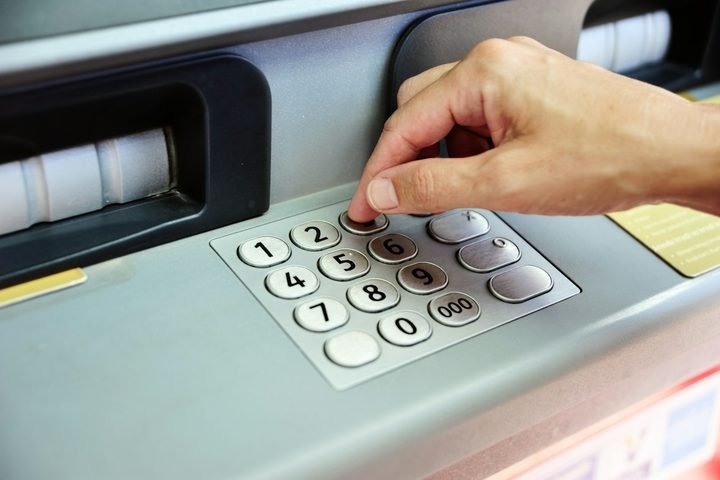
A cash advance lets you borrow cash against your credit card's credit line. You can usually get one at an ATM with your card's PIN, at a bank teller, or by using a convenience check your card issuer mailed you. The CFPB is clear that getting cash with your card at an ATM is considered a short-term loan and can be expensive.
Cash advances are treated differently from purchases on the same card. They often have their own fee, their own interest rate, and their own limit, which is why they cost more than people expect.
The three ways a cash advance costs more
| Cost | What the CFPB says |
|---|---|
| Cash advance fee | The fees can be substantial. The fee may be a flat amount or a percentage of the advance, and ATM fees may also apply. |
| Higher interest rate | You will also commonly pay a higher interest rate for a cash advance than for a typical purchase. |
| No grace period | Interest generally starts as of the date of the transaction, not after your due date. |
Sources: CFPB, Can I withdraw money from my credit card at an ATM? and What is a grace period for a credit card?
That last point is the one that surprises people most. With purchases, the CFPB explains, a grace period is the time between the end of a billing cycle and your payment due date, and if you pay in full you often avoid interest. Cash advances generally don't get that break. Interest starts the day you take out the money.
What a $500 cash advance can cost
Nina's $500 at the ATM
Nina needs $500 for a deposit on an apartment and takes a cash advance from her credit card at an ATM. Her card charges a cash advance fee of 5% and a cash advance APR higher than her purchase APR. The ATM charges its own fee too.
Right away, she owes $500 plus a $25 cash advance fee, plus the ATM fee. Interest at the higher rate starts that same day.
If she pays it all off within a few weeks, the fees will likely be the biggest cost. If she carries the balance for months, the higher interest rate adds up on top.
Had she put $500 on the card as a purchase and paid it in full by the due date, she might have paid no interest at all.
Illustrative example. Your card's actual fee and APR are in your cardholder agreement and on your statement.
Lower limits and other fine print
The CFPB notes that cards often have a separate, lower limit for cash advances and for checks written from your credit card account. So even if you have plenty of room on your card, you may only be able to take a fraction of it in cash.
- ✓ Convenience checks written from your credit card account can fall under the same lower limit, so read their terms before you use one.
- ✓ Your statement and cardholder agreement list the cash advance fee and APR. You can also call the number on the back of your card.
Find the cash advance APR and fee on your latest statement before you use the ATM. Two minutes of reading can save you an expensive surprise.
Cheaper ways to get cash
A cash advance is fast, but it's rarely the cheapest option. Before you use one, consider:
- Ask the biller for time Many landlords, utilities and medical offices offer payment plans if you ask before the due date.
- Check a credit union Some credit unions offer small loans, including payday alternative loans, with lower costs.
- Compare a personal loan A personal loan has a fixed rate and payment, and its APR may be lower than a cash advance APR.
- Use savings if you have them Even a partial amount from savings reduces what you need to borrow.
- Pay with the card instead If the merchant takes cards, a purchase is usually cheaper than taking cash out.
If you've already taken a cash advance
Pay it off as soon as you can, because interest is building every day. If the cash advance is hard to pay down, call your card issuer and ask about a hardship program or a lower rate. A nonprofit credit counselor can also help you make a plan.
Cash advance vs. personal loan
If you need more than a small amount, it's worth comparing a cash advance with a personal loan. The two work very differently:
| Credit card cash advance | Personal loan | |
|---|---|---|
| Upfront cost | Cash advance fee, plus any ATM fee | Some loans charge an origination fee, some don't |
| Interest | Commonly a higher rate than purchases, starting right away | A fixed rate shown as an APR before you sign |
| Repayment | Minimum payments on a revolving balance | Fixed monthly payments over a set term |
| Speed | Immediate at an ATM | Often a day or more to fund |
General comparison. Compare the actual APRs and fees you're offered.
For an amount you can repay within weeks, the cash advance fee is usually the main cost. For a larger amount you'll repay over months, a personal loan with a fixed payment and a known end date may cost less and be easier to manage.
Frequently asked questions
Do cash advances hurt my credit score?
A cash advance adds to your card balance, which raises how much of your credit you're using. Paying it down quickly helps limit the effect.
Is a cash advance cheaper than a personal loan?
Often not. Cash advances usually have a fee, a higher interest rate and no grace period. For larger amounts repaid over months, a personal loan with a fixed APR may cost less.
Is a credit card cash advance a loan?
Yes. The CFPB says getting cash from your credit card at an ATM is considered a short-term loan and can be expensive.
Is there a fee for a cash advance?
Usually. The fee may be a flat amount or a percentage of the advance, and ATM fees may also apply.
When does interest start on a cash advance?
Generally on the date of the transaction. Cash advances usually don't get a grace period.
Is the interest rate higher on a cash advance?
Commonly, yes. The CFPB says you'll often pay a higher rate for a cash advance than for a typical purchase.
How much cash can I take out?
Many cards set a separate, lower limit for cash advances. Check your statement or call your card issuer.
Ready to compare loan options?
Compare options available where you live, or call to talk it through with a licensed agent. Looking is free.
ConnectingCrowd is an information site and is not affiliated with any government agency.
Compare personal loan options
SponsoredRelated guides
See all personal loans guides Personal loan vs. credit card: which is cheaper, and when each one makes sense
 APR vs interest rate: why the lower rate isn't always the cheaper loan
 Payday alternative loans: a lower-cost small loan from federal credit unions
 How to check if a lender is licensed in your state, step by step
 Earned wage access apps: how paycheck advances work and what they really cost
 Holiday loans: how to pay for gifts and travel without falling into a debt trap
See loan options in your state
Loan options vary by state and lender. Enter your ZIP code to compare options. Looking is free.
Compare loan options for your situation
SponsoredSources
Disclaimer: This article is for general information only and is based on publicly available sources, which may be incomplete, outdated or incorrect. It is not legal, financial, insurance, tax or medical advice. ConnectingCrowd is not affiliated with any government agency, insurer or lender. Please do your own research and talk to a licensed professional before making any decision.