
In 30 seconds
- Florida law defines a sinkhole as a land form created when soil, sediment or rock sinks as the layers beneath are dissolved by groundwater.
- Florida insurers must offer sinkhole coverage, and any policy that insures your home must include catastrophic ground cover collapse (CGCC) coverage.
- CGCC applies only when four conditions are met, including that the home is condemned and ordered vacated.
- If a sinkhole claim is denied or disputed, you can use the Florida DFS Neutral Evaluation Program.
In this article
Florida sinkhole coverage facts
- Sinkhole coverage: insurers must offer it
- CGCC coverage: required in policies that insure the home
- CGCC: needs all four conditions, including condemnation
- Disputes: DFS Neutral Evaluation Program
- Help: 1-877-MY-FL-CFO (1-877-693-5236)
From the Florida Department of Financial Services guide to sinkholes and catastrophic ground cover collapse (February 2026).
What counts as a sinkhole
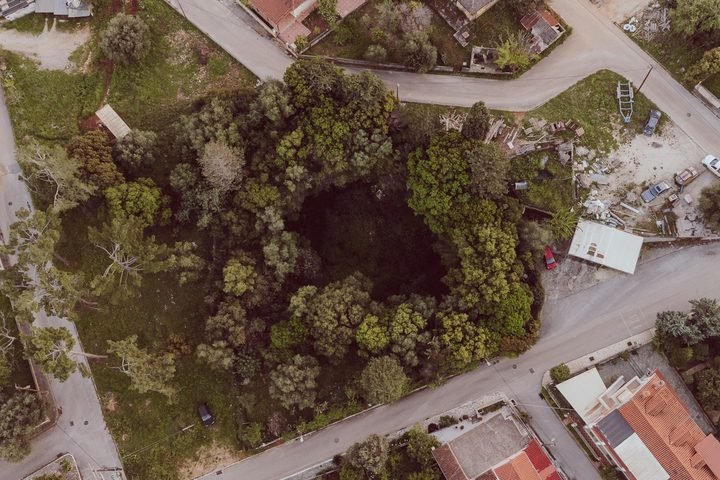
The Florida Department of Financial Services (DFS) uses the definition in Florida law: a sinkhole is a land form created by subsidence of soil, sediment or rock as underlying strata are dissolved by groundwater. In plain terms, water slowly eats away at rock underground, and the ground above it settles or drops.
Some sinkholes open suddenly and dramatically. Many more work slowly, causing gradual settling that shows up as cracks and uneven floors. That difference matters, because the two kinds of insurance coverage in Florida are built around it.
Sinkhole coverage vs. catastrophic ground cover collapse
DFS explains that Florida insurers must offer sinkhole coverage, but it isn't included in every policy. Catastrophic ground cover collapse, or CGCC, is different: if an insurer agrees to insure your home, the policy must include CGCC coverage.
| Sinkhole coverage | Catastrophic ground cover collapse (CGCC) | |
|---|---|---|
| Included in every policy? | No. Insurers must offer it, and you may need to add it. | Yes, in any policy that insures your home. |
| What it's for | Damage from sinkhole activity, as defined in your policy | Only a sudden collapse that meets all four conditions below |
| Can it be declined? | Yes. An insurer can decline it after geological testing. | Required if the home is insured |
Source: Florida DFS, Sinkholes and catastrophic ground cover collapse guide (February 2026).
DFS says an insurer may require geological testing of your property before granting sinkhole coverage, and it can decline the coverage based on the results.
The four conditions for CGCC
CGCC sounds broad, but it's narrow. According to DFS, all four of these must be true for a claim to qualify:
- Abrupt collapse The ground cover collapses suddenly.
- A visible depression There's a depression in the ground that's clearly visible to the naked eye.
- Structural damage The building, including its foundation, has structural damage.
- Condemned and vacated The insured structure is condemned and ordered to be vacated.
That last condition is the one that surprises people. Settling that cracks your walls, or even a hole in the yard, generally won't qualify for CGCC unless the home is condemned. For slower damage, you'd need sinkhole coverage.
Cracks aren't always structural damage
Even with sinkhole coverage, a claim usually turns on whether there's structural damage. DFS warns that a crack stretching across an interior wall or floor tiles popping up may not count as structural damage. Your policy will define the term, so read that definition before you file.
The crack in the hallway
Ken and Lisa live in central Florida. They notice a long crack running across their hallway wall, and a few kitchen tiles have lifted. Their neighbor mentions sinkholes, and they start to worry.
They pull out their declarations page and see that they added sinkhole coverage when they bought the policy. They call their insurer and report the damage.
The insurer arranges testing. If it finds sinkhole activity and the damage meets the policy's definition of structural damage, DFS says the policy should pay for the testing and repairs, less any deductible.
If the claim had been denied, they could have asked to use the state's Neutral Evaluation Program.
Illustrative example. Names and numbers are made up to show how it works.
If you file a sinkhole claim
DFS's guide points to a few things worth knowing when you report suspected sinkhole damage:
- ✓ Report it promptly. Call your insurer as soon as you notice signs of damage, and take dated photos.
- ✓ Testing. If coverage applies, DFS says the policy should pay for the testing and repairs, less any applicable deductibles.
- ✓ Know your deductible. Check your declarations page for the deductible that applies to this kind of claim.
- ✓ Disputes. If your claim is denied or disputed, you're entitled to take part in the DFS Neutral Evaluation Program.
- ✓ Get help. Call the DFS consumer helpline at 1-877-MY-FL-CFO (1-877-693-5236).
Reading your policy for sinkhole terms
Before you ever need to file, it helps to know where your policy talks about sinkholes. Most of the answers are on two pages: the declarations page and the definitions section.
- ✓ Declarations page. Look for a line or endorsement that mentions sinkhole loss. If you don't see one, ask your agent whether you have it or only the required CGCC coverage.
- ✓ Definitions. Find how the policy defines sinkhole, sinkhole loss and structural damage. These words decide whether a crack in the wall is covered.
- ✓ Exclusions. Look for any earth movement exclusion and read it next to the sinkhole and CGCC language so you understand how they fit together.
- ✓ Your notes. Keep dated photos of your walls, floors and foundation now. If cracks appear later, you'll be able to show when they started.
If any of the wording is unclear, ask your agent or insurer to explain it in writing, or call the DFS helpline for free help.
Should you buy sinkhole coverage?
It depends on where you live, what testing shows, and the cost. Because CGCC only applies to a sudden collapse that leaves a home condemned, it won't help with the slower settling damage that many sinkholes cause. If you live in an area where sinkholes are common, ask your insurer or agent:
- Is sinkhole coverage on my policy now? Check your declarations page or ask your agent.
- What would it cost to add? Ask for the premium and the deductible in writing.
- Will you require testing? DFS says an insurer may require geological testing before granting coverage.
- How does my policy define structural damage? This definition will shape whether a future claim is paid.
If you're outside Florida, sinkhole rules are different. Ask your state's insurance department how your policy treats ground collapse and earth movement.
Frequently asked questions
Does homeowners insurance cover sinkholes?
In Florida, insurers must offer sinkhole coverage, but it isn't in every policy. Catastrophic ground cover collapse coverage is required in any policy that insures your home, but it only applies when four strict conditions are met.
What is catastrophic ground cover collapse?
It's a sudden collapse of the ground that leaves a visible depression, causes structural damage to the home including its foundation, and results in the home being condemned and ordered vacated. All four conditions must be met.
Is a crack in my wall structural damage?
Not necessarily. Florida DFS says a crack across an interior wall or popped floor tiles may not constitute structural damage. Check how your policy defines it.
Can an insurer refuse sinkhole coverage?
Yes. Florida DFS says an insurer can decline sinkhole coverage after geological testing, and may require testing before granting it.
What if my sinkhole claim is denied?
In Florida, you can take part in the DFS Neutral Evaluation Program. You can also call the DFS helpline at 1-877-693-5236.
Review your home insurance coverage
Compare options available where you live, or call to talk it through with a licensed agent. Looking is free.
ConnectingCrowd is an information site and is not affiliated with any government agency.
Compare home insurance options
SponsoredRelated guides
See all home insurance guides Earthquake insurance: the coverage your homeowners policy leaves out
 What does homeowners insurance cover? A room-by-room walk through your policy
 Your home insurance claim was denied or underpaid. Here is what you can do
 Does homeowners insurance cover stolen packages? What to do when a porch pirate strikes
 Space heater fires and home insurance: what's covered, and the safety rules that prevent them
 Does homeowners insurance cover dog bites? What's covered, and when breed matters
See home insurance options in your state
Coverage and prices vary by state and insurer. Enter your ZIP code to compare options. Looking is free.
Compare home insurance for your situation
SponsoredDisclaimer: This article is for general information only and is based on publicly available sources, which may be incomplete, outdated or incorrect. It is not legal, financial, insurance, tax or medical advice. ConnectingCrowd is not affiliated with any government agency, insurer or lender. Please do your own research and talk to a licensed professional before making any decision.