
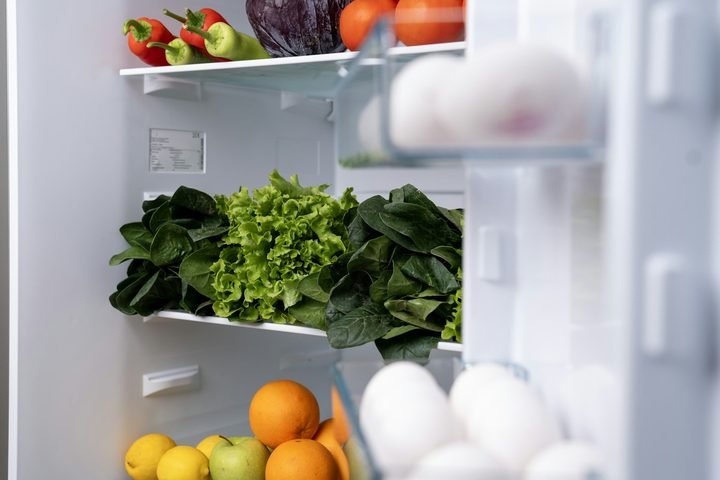
In 30 seconds
- Texas says most homeowners and renters policies pay up to $500 or more for spoiled food when the power fails under certain circumstances, often with no deductible.
- Connecticut says the standard homeowners policy usually doesn't include food spoilage, but many insurers sell it as an add-on for a small premium.
- A closed refrigerator keeps food cold for about 4 hours. A full freezer holds its temperature for about 48 hours.
- Throw out perishable food that has been above 40 degrees F for two hours or more.
In this article
Food safety in an outage
- Refrigerator: about 4 hours if the door stays closed
- Full freezer: about 48 hours (24 hours if half full)
- Danger zone: above 40 degrees F
- Discard: perishables above 40 degrees F for 2 hours or more
- Refreeze: OK if food still has ice crystals or is 40 degrees F or below
Source: FoodSafety.gov, Winter weather food safety.
Is spoiled food covered?
It depends on your policy, and state regulators describe it a little differently. The Texas Department of Insurance says most homeowners and renters policies will pay up to $500 or more for spoiled food if the power fails under certain circumstances, and that often there's no deductible.
Connecticut's Insurance Department says the standard homeowners policy usually doesn't include coverage for spoiled food, though some insurers provide a limited amount. It adds that refrigerated food spoilage coverage is a popular option insurers offer, and you may be able to buy it for a small additional premium.
| State regulator | What it says about food spoilage |
|---|---|
| Texas Department of Insurance | Most homeowners and renters policies pay up to $500 or more under certain circumstances, often with no deductible |
| Connecticut Insurance Department | Standard policy usually doesn't include it, but it's a popular add-on for a nominal premium |
| Oregon Division of Financial Regulation | Coverage may be available. If the loss is close to your deductible, you may not want to file. |
Check your own policy. Coverage depends on the insurer, the policy form and the cause of the outage.
How to find out if you're covered
- ✓ Look in your policy or declarations page for "refrigerated property" or "food spoilage" coverage.
- ✓ Note the limit, often a few hundred dollars.
- ✓ Check whether a deductible applies to this coverage.
- ✓ Check whether the cause matters, such as an outage on your property versus a utility outage elsewhere.
- ✓ If you can't tell, call your agent or insurer and ask.
If your policy doesn't include food spoilage coverage, ask your insurer whether you can add it. Connecticut notes it's often available for a small premium.
Should you file a claim?
Oregon's regulator points out that minor losses like food spoilage may not exceed your deductible, and if the loss is close to or less than your deductible, you may not want to file a claim. If your food spoilage coverage has no deductible, a claim may make more sense, but it's still worth asking whether it could affect your premium.
| Your situation | What to consider |
|---|---|
| Coverage with no deductible | A claim may be worthwhile. Ask about any effect on your rates. |
| Deductible larger than the food lost | A claim won't pay anything |
| Large freezer of meat lost | Compare the value with your deductible and limit |
| No food spoilage coverage | Not covered. Consider adding it for next time. |
General guidance. Your policy terms decide.
What to keep and what to throw out
FoodSafety.gov's winter weather guidance gives clear rules. A refrigerator keeps food cold for about 4 hours if the door stays closed. A full freezer holds its temperature for about 48 hours, or 24 hours if it's half full.
- ✓ Throw out perishable food, such as meat, poultry, seafood, eggs and leftovers, that has been above 40 degrees F for two hours or more.
- ✓ Food can be safely refrozen if it still contains ice crystals or is at 40 degrees F or below.
- ✓ Never taste food to decide whether it's safe.
- ✓ When in doubt, throw it out.
Use a thermometer to check the temperature inside your refrigerator and freezer. Keeping the doors closed is the single best way to make your food last longer.
Make food last longer during an outage
- ✓ Keep refrigerator and freezer doors closed as much as possible.
- ✓ Group frozen items together so they stay cold longer.
- ✓ Use ice to help keep food cold. FoodSafety.gov says a refrigerator or freezer without power can work like an old-fashioned icebox.
- ✓ Keep a thermometer in both the refrigerator and freezer so you know the temperature when power returns.
- ✓ Before storm season, freeze containers of water to help keep a freezer cold.
A little preparation can save hundreds of dollars of groceries, and it may mean you never need to file a claim at all. It's also worth keeping a few days of shelf-stable food and water on hand, so you aren't forced to rely on food that may no longer be safe.
Document the loss before you toss it
- Take photos Photograph the contents of your refrigerator and freezer before you throw anything away.
- Make a list Write down what you're discarding and an estimate of what it cost.
- Keep receipts Grocery receipts or store account histories help support the value.
- Note the outage Record when the power went out and came back on.
- Call your insurer Ask about coverage, limits and deductibles before you file.
What about a hotel during an outage?
Texas says homeowners policies usually pay for hotels only if your house was damaged by an event the policy covers, so a power outage on its own probably won't qualify. Connecticut says that when you're without power because of a widespread outage away from your property, homeowners insurance doesn't cover additional living expenses. Oregon adds that if your home only had minor damage and is still safe to live in, additional living expenses may not apply.
A real-life scenario
The Nguyens' ice storm
An ice storm cuts power to the Nguyens' neighborhood for three days. Their chest freezer, packed with meat, thaws completely.
Before discarding anything, they photograph the freezer and refrigerator and list the items, estimating about $450 in food.
Their policy includes food spoilage coverage up to $500 with no deductible. They call their insurer, send the photos and list, and are reimbursed.
Illustrative example. Coverage depends on your policy and state.
Illustrative example. Names and numbers are made up to show how it works.
Frequently asked questions
Does homeowners insurance cover spoiled food after a power outage?
Sometimes. Texas says most homeowners and renters policies pay up to $500 or more under certain circumstances. Connecticut says it's usually an add-on. Check your policy.
Is there a deductible for food spoilage?
Texas says that often there's no deductible for spoiled food coverage. Your policy decides.
How long is food safe in the fridge without power?
About 4 hours if the door stays closed, according to FoodSafety.gov.
Can I refreeze food after the power comes back?
FoodSafety.gov says food can be safely refrozen if it still contains ice crystals or is at 40 degrees F or below. Never taste food to decide.
Will insurance pay for a hotel during a power outage?
Usually not. Policies typically pay for hotels only when a covered event damages your home.
Review your home insurance coverage
Compare options available where you live, or call to talk it through with a licensed agent. Looking is free.
ConnectingCrowd is an information site and is not affiliated with any government agency.
Compare home insurance options
SponsoredRelated guides
See all home insurance guides What does homeowners insurance cover? A room-by-room walk through your policy
 Additional living expenses coverage: how your policy helps when you must move out
 Homeowners insurance deductibles: flat, percentage and the one hiding in your hurricane coverage
 Does homeowners insurance cover stolen packages? What to do when a porch pirate strikes
 Does homeowners insurance cover dog bites? What's covered, and when breed matters
 Ice dams and homeowners insurance: is the water damage covered?
See home insurance options in your state
Coverage and prices vary by state and insurer. Enter your ZIP code to compare options. Looking is free.
Compare home insurance for your situation
SponsoredSources
Disclaimer: This article is for general information only and is based on publicly available sources, which may be incomplete, outdated or incorrect. It is not legal, financial, insurance, tax or medical advice. ConnectingCrowd is not affiliated with any government agency, insurer or lender. Please do your own research and talk to a licensed professional before making any decision.